
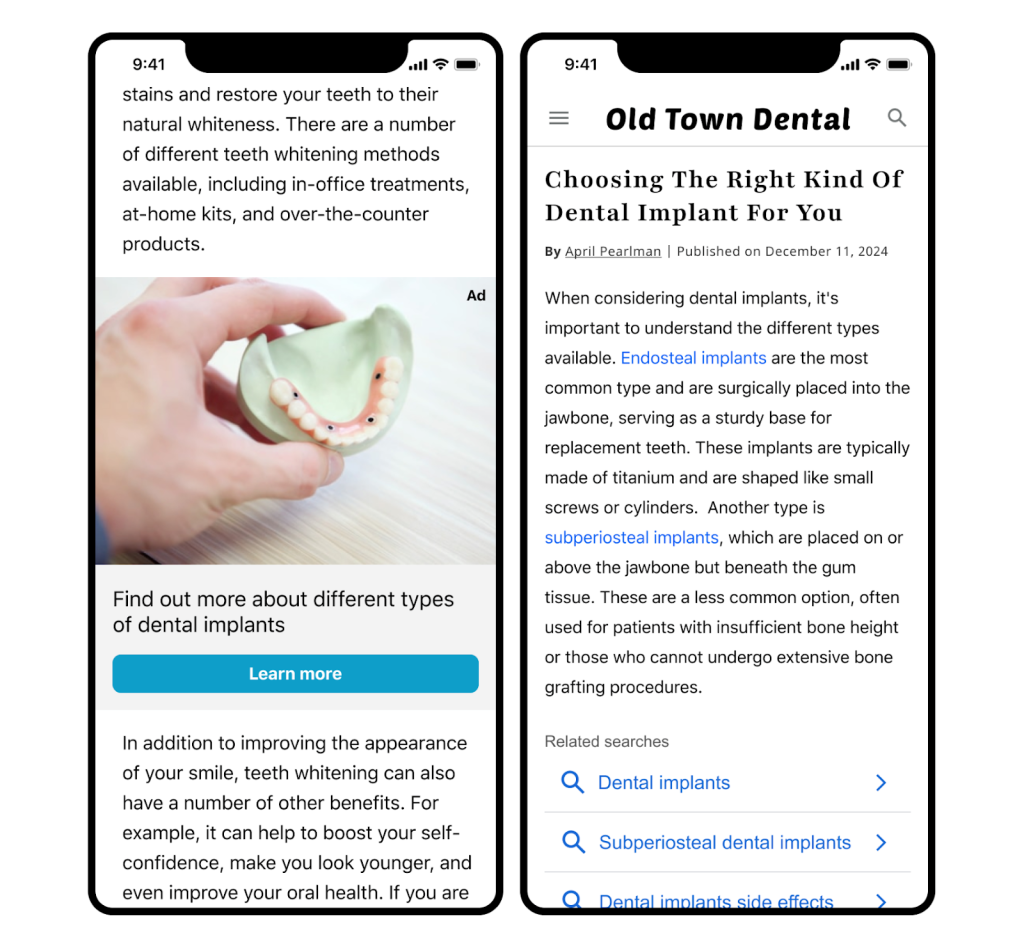
RSOC (Related Search on Content) is a Google-powered monetization format designed to replace traditional parked pages and older AFD setups. Instead of sending users to empty pages filled with ads, RSOC combines real content with search-like ad units — creating a more natural user experience and improving conversion rates.
In simple terms, RSOC allows publishers and affiliates to drive paid traffic to content pages that mimic search results. Users interact with relevant content first, then click on ads that match their intent.
This approach performs better than classic domain parking because users don’t feel like they’ve landed on a “dead page.” Instead, they engage with content and continue their journey through relevant search suggestions and ads.
How RSOC Works
The RSOC funnel is straightforward but highly effective:
- A user clicks on a paid ad (typically from Google Ads or similar sources).
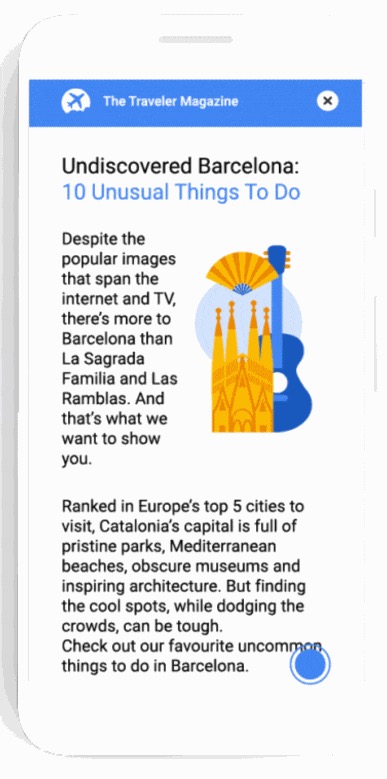
- Instead of a traditional landing page, they land on an RSOC page that looks like a search results page.
- The page contains related search queries and ads tailored to the user’s intent.
- The user clicks on one of these results and is redirected to an advertiser’s website.
- You earn revenue from the click (CPC model).
Depending on the setup and provider, this flow can involve 1–3 clicks before monetization happens.
In practice, RSOC works as a bridge between paid traffic and advertiser demand, filtering users through intent-based interactions.
How to Get Started with RSOC
There are two main ways to launch RSOC campaigns:
- Direct integration via Google AdSense. This option is suitable for high-quality websites with original content that comply with Google’s policies. You’ll need to pass moderation and implement RSOC units manually.
- Working with feed providers. Platforms like System1, Ads.com, Intango, or similar offer ready-made feeds and simplified onboarding. This approach is easier to scale but usually comes with lower margins due to rev share and traffic restrictions.
In practice, direct AdSense integration offers higher payouts, while feed providers allow faster launches and fewer compliance requirements.
Why RSOC Works So Well
RSOC performs better than traditional monetization formats because it aligns with user intent. Instead of forcing users into a hard sell, it lets them continue searching and exploring.
This leads to:
- Higher engagement rates
- Better click-through rates (CTR)
- Improved revenue per click (RPC)
- Lower bounce rates compared to parked pages
From Google’s perspective, RSOC also provides a better user experience — which is why it’s gradually replacing older monetization models.
RSOC Monetization Strategies
While RSOC is primarily built around ad clicks, there are multiple ways to monetize the same traffic:
- Ad monetization (CPC). The core model — revenue from clicks on search ads.
- Affiliate offers. You can integrate pre-landers or direct affiliate links within the content.
- Lead generation. Capture emails using simple forms or lead magnets before users continue their journey.
The key advantage of RSOC is flexibility — the same traffic can be monetized in multiple ways depending on your setup.
How to Build High-Converting RSOC Pages
Your content page is the most important part of the RSOC funnel. It determines whether users engage or bounce.
Here are the core principles:
- Match user intent. Your content must align with what the user expects after clicking the ad.
- Keep content simple and relevant. Avoid unnecessary complexity — clarity converts better.
- Use strong headlines and structure. The first screen should immediately confirm relevance.
- Blend monetization naturally. Ads and links should feel like part of the experience, not interruptions.
- Optimize page speed. Slow pages kill RSOC performance.
- Test layouts and variations. Small changes in structure can significantly impact RPC and CTR.
Page builders like Carrd, Unbounce, or similar tools can be used to quickly create and test RSOC pages without coding.
Key Metrics to Track in RSOC Campaigns
To scale RSOC profitably, you need to monitor the right metrics:
- CTR (Click-Through Rate) — how often users click
- CPC (Cost Per Click) — your traffic cost
- RPC (Revenue Per Click) — your earnings per click
- CR (Conversion Rate) — how well your funnel converts
- Bounce Rate — user engagement indicator
- ROAS (Return on Ad Spend) — overall campaign profitability
The main goal is simple: keep your RPC higher than CPC. Everything else is optimization.
Final Thoughts
RSOC is one of the most efficient ways to monetize paid traffic today, especially for search-based campaigns. It combines content, intent, and advertising into a single flow — making it more scalable than traditional landing pages or parked domains.
As Google continues to prioritize user experience, formats like RSOC will only become more relevant. For affiliates and publishers, this creates a window of opportunity to enter early and build profitable funnels before the space becomes saturated.
FAQ
RSOC (Related Search on Content) is a monetization model where users are redirected to content pages with search-like ad units. Instead of landing on a traditional page, users interact with relevant search results and ads, generating revenue through clicks.
Users click on an ad, land on a content-based page with related search queries, and then click on ads or results that match their intent. Publishers earn revenue on a cost-per-click (CPC) basis.
Yes. RSOC typically outperforms domain parking because it provides real content and a better user experience, which leads to higher engagement and better conversion rates.
Not necessarily. While direct AdSense integration offers higher payouts, many affiliates use feed providers like System1 or Ads.com to run RSOC campaigns without strict approval requirements.
Search traffic (Google Ads, native search feeds) performs best because RSOC relies heavily on user intent. The closer your traffic matches search intent, the higher your RPC.

Content verified by expert
Dmitrii has led media projects such as CPA Mafia, CyberAff, ProTraffic, AffTimes, CPA Monstro, and Affiliate Valley. His affiliate marketing expertise was further enriched by his work as a webmaster relations manager at the WebVork nutra network.
On December 31, 2024, Dmitrii left his position as Head of Media Projects at ADSBASE Group. He currently leads CPA.LIVE and the ADDSET forum.
Holding numerous certificates, Dmitrii confirms his authority in digital marketing.

I’ve been writing texts for over ten years, five of which were devoted to casinos and betting companies. I create conversion-optimized nutra funnels. I know how and where to find any—even the rarest—information. I speak Russian and Ukrainian and have experience with Telegram, Instagram, VK, Facebook, and other social networks. I’ve worked for various traffic-arbitrage media outlets and with iGaming affiliate programs.